Ultrasəslə Gücləndirilmiş Sabit Yataq Reaktorları
Sonikasiya əsasən paketlənmiş katalizator yatağının ətrafında və içərisində kütlə ötürülməsini gücləndirməklə sabit yataqlı reaktorlarda katalitik reaksiyaları yaxşılaşdıra bilər. Bundan əlavə, sonikasiya katalizator səthindən passivləşmə və çirklənmə qatlarını aradan qaldırır və beləliklə katalizator davamlı olaraq yenidən yaranır.
Sonication How Improve Improved Fixed Bed Katalizasi
Sabit yataqlı reaktorda katalizator hissəcikləri sabit qalır, maye, qaz və ya çoxfazalı reaktantlar yataqdan axır. Reaksiya performansı tez-tez xarici kütlə ötürülməsi, məsamələrin diffuziyası, kanallaşma, çirklənmə və istilik ötürmə gradientləri ilə məhdudlaşır. Ultrasəs bu məhdudiyyətlərin bir neçəsini akustik kavitasiya, mikroaxın, kəsilmə qüvvələri və təzyiq osilasiyaları yaradaraq azalda bilər.

Sonicator UIP2000hdT sabit yataq reaktoruna inteqrasiya edilmiş
Ultrasəs gücləndirilmiş sabit yataq reaksiyalarının əsas təsirləri
- Təkmilləşdirilmiş xarici kütlə ötürülməsi: Ultrasəs mikroaxını katalizator hissəcikləri ətrafında dayanıqlı sərhəd qatını azaldır və reaktantların aktiv sahələrə daha səmərəli çatmasına imkan verir.
- Poyre girişinin yaxşılaşdırılması: Kavitasiya səbəbiylə yaranan təzyiq dəyişiklikləri və maye hərəkəti reaktantların katalizator gövdələrinə nüfuzunu yaxşılaşdıra və məhsulların gövdələrdən çıxmasını təmin edə bilər.
- Çirklənmə və pasivləşmənin azaldılması: Sonikasiya katalizator səthlərindəki lövhələri, polimer filmləri, koks öncüllərini və ya digər pasivləşdirici qatları aradan qaldırmağa kömək edə bilər və katalitik aktivliyi daha uzun müddət saxlayır.
- Sıxılmış yataqlarda azaldılmış kanallaşma: Mikroqablaşdırılmış yataq tədqiqatlarında ultrasəs axın davranışını dəyişdirir və dispersiyanı azaldır, reaktorun daha ideal tıxac-axın davranışına yaxınlaşmasına kömək edir.
- Təkmilləşdirilmiş İstilik Transferi: Akustik axın və turbulensiya yerli istilik yayılmasını yaxşılaşdırır, katalizator yatağında isti nöqtələri və ya soyuq zonaları azaldır.
- Daha yüksək çevrilmə və məhsuldarlıq: Kütlə ötürülməsini və katalizatora çıxışı yaxşılaşdırmaqla, sonikasiya reaksiya sürətini, çevrilməni və məhsul məhsuldarlığını artıra bilər, xüsusilə reaksiya yalnız kinetik məhdudiyyətli deyil, nəqliyyat məhdudiyyətli olduqda.
Təkmilləşdirilmiş maye-sərt təmas: Ultrasəs katalizator hissəciklərinin daha yaxşı islanmasını təşviq edir, bu xüsusilə damcı yatağı, şlam ilə qidalanan və ya maye fazalı sabit yataqlı sistemlərdə faydalıdır.
Sonikasiya Sabit Yataq Katalizini Necə Yaxşılaşdırır?
Əsas mexanizm akustik kavitasiyadır: ultrasəs dalğaları mikroskopik qabarcıqlar yaradır və şiddətlə böyüyür və çökür. Onların dağılması yerli kəsilmə, mikrojetlər, şok dalğaları və intensiv qarışdırma yaradır. Katalizator səthlərinin yaxınlığında bu effektlər bərk-maye interfeysini təmizləyə, aktivləşdirə və yeniləyə bilər. Sonakatalizin icmalları bunu ultrasəs və bərk katalizatorlar arasında sinerji kimi təsvir edir, bu da istilik ötürülməsi, kütlə ötürülməsi və katalitik səthlərdə lokal təsirlərin yaxşılaşdırılmasını əhatə edir.
Sonikasiya ən çox sabit yataq reaksiyası belə hallarda faydalıdır:
- katalizator məsamələrinə yavaş diffuziya,
- katalizator hissəciklərinin zəif islanması,
- porlar daxilində məhsul yığılması,
- çirklənmə və ya səth passivasiyası,
- kütlə ötürülməsi məhdud kinetika,
- çoxfazalı axın yanlış paylanması,
- dolu yataqdan kanal edir.
Sabit yataq katalizatorları
Sabit çarpayılar (bəzən qablaşdırılmış yataq da adlanır) adətən katalizator qranulları ilə yüklənir, bunlar adətən diametri 1-5 mm olan qranullardır. Onlar reaktora tək yataq, ayrı qabıqlar və ya borular şəklində yüklənə bilər. Katalizatorlar əsasən nikel, mis, osmium, platin və rodium kimi metallara əsaslanır.
Güc ultrasəs dalğalarının heterojen kimyəvi reaksiyalara təsiri yaxşı məlumdur və sənaye katalitik proseslərində geniş istifadə olunur. Sabit yataqlı reaktordakı katalitik reaksiyalar da sonikasiya müalicəsindən fayda görür. Sabit yataqlı katalizatorun ultrasəs şüalandırılması yüksək reaktiv səthlər yaradır, maye faza (reaktivlər) ilə katalizator arasındakı kütlə viqasımasını artırır və səthdəki pasivləşdirici örtükləri (məsələn, oksid təbəqələri) aradan qaldırır.
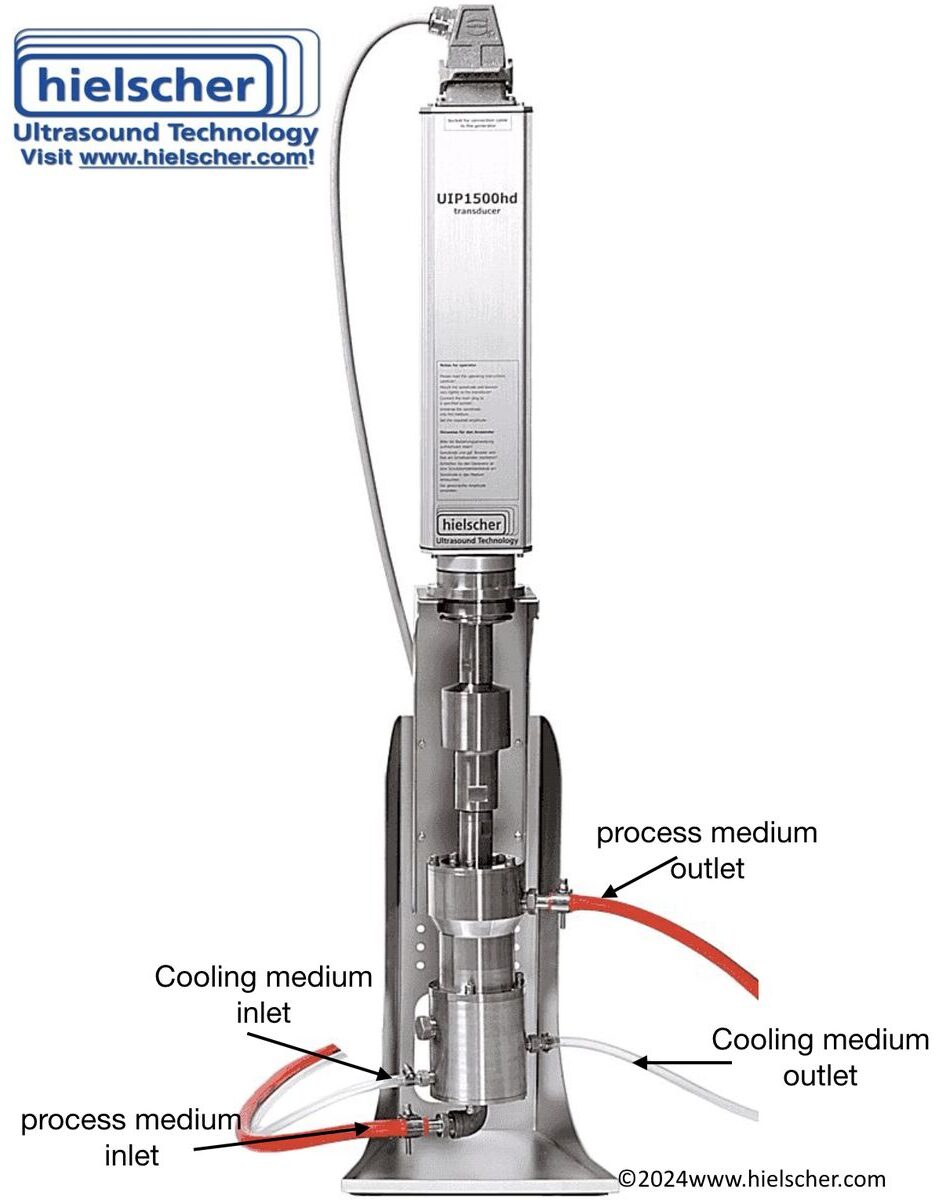
İstifadə olunmuş katalizatorların reaktivləşdirilməsi və təkrar istifadəsi üçün axın-hüceyrəli Sonicator UIP1500hdT
- Təkmilləşdirilmiş səmərəlilik
- Artan reaktivlik
- Artan çevrilmə dərəcəsi
- Daha yüksək məhsuldarlıq
- Katalizatorun təkrar emalı
Katalitik reaksiyaların ultrasəs intensivləşdirilməsi
Ultrasonik qarışdırma və qarışdırma reaktiv və katalizator hissəcikləri arasında əlaqəni yaxşılaşdırır, yüksək reaktiv səthlər yaradır və kimyəvi reaksiyanı başlatır və/və ya gücləndirir.
Ultrasəs katalizatorunun hazırlanması kristallaşma davranışında, dispersiyada / deaglomerasiyada və səth xüsusiyyətlərində dəyişikliklərə səbəb ola bilər. Bundan əlavə, əvvəlcədən əmələ gələn katalizatorların xüsusiyyətlərinə passivləşdirici səth təbəqələrinin çıxarılması, daha yaxşı dispersiya, kütlə ötürülməsinin artırılması təsir göstərə bilər.
Ultrasəs ilə yaxşılaşdırılmış reaksiyalara nümunələr
- Hidrogenləşmə reaksiyaları üçün Ni katalizatorunun ultrasəslə əvvəlcədən təmizlənməsi
- Tartar turşusu ilə sonikləşdirilmiş Raney Ni katalizatoru çox yüksək enantioselektivliyə səbəb olur
- Ultrasəs vasitəsilə sintez olunmuş Fischer-Tropsch katalizatorları
- Artan reaktivlik üçün sonokimyəvi şəkildə işlənmiş amorf toz katalizatorları
- Amorf metal tozlarının sono-sintezi
Ultrasonik katalizatorun bərpası
Sabit yataqlı reaktorlarda bərk katalizatorlar adətən sferik muncuqlar, pelletlər, ekstrudatlar və ya silindrik hissəciklər şəklində istifadə olunur. Kimyəvi reaksiyalar zamanı katalizator səthi çirkli təbəqə tərəfindən passivləşə bilər, bu da zamanla katalitik aktivliyin və/və ya selektivliyin tədricən itirilməsinə səbəb olur.
Katalizatorun deaktivasiya vaxtı xeyli dəyişir. Məsələn, cracking katalizatorunun deaktivləşməsi saniyələr ərzində baş verə bilər, halbuki ammonyak sintezində istifadə olunan dəmir katalizatoru 5–10 il aktiv qala bilər. Buna baxmayaraq, katalizator deaktivasiyası demək olar ki, bütün katalitik proseslərdə müşahidə olunur. Fərqli deaktivasiya mexanizmləri baş verə bilər – o cümlədən kimyəvi, mexaniki və termal deqradasiya – çirklənmə katalizatorun çürüməsinin ən çox yayılmış səbəblərindən biridir.
Fouling refers to the physical deposition of species from the fluid phase onto the catalyst surface and within its pores. These deposits block reactive sites, restrict pore accessibility, and reduce contact between reactants and the active catalyst surface. Catalyst fouling by coke or carbonaceous deposits is often a rapid process; however, in many cases it can be partially or fully reversed by ultrasonic regeneration.
Ultrasonic cavitation is an effective method for removing passivating fouling layers from catalyst surfaces. During sonication, high-intensity ultrasound generates cavitation bubbles in a liquid medium. Their collapse produces localized shear forces, microjets, shock waves, and intense micro-mixing. These effects help detach fouling residues from the catalyst surface, reopen blocked pores, and restore access to active sites.
Ultrasəsli katalizator bərpası adətən katalizator hissəciklərinin deionizə edilmiş su və ya uyğun bir həll edici kimi mayedə yayılması və süspansiyonun nəzarət olunan ultrasəs müalicəsinə məruz qoyulması ilə həyata keçirilir. Bu proses platin/silikon lifli katalizatorlar, nikel katalizatorları və digər dəstəklənmiş metal katalizatorlar daxil olmaqla müxtəlif katalizator materiallarından çirklənmiş qalıqları çıxara bilər. Nəticədə, sonikasiya katalizatorun bərpasına, katalizatorun ömrünün uzanmasına və prosesin davamlılığının yaxşılaşdırılmasına töhfə verə bilər.
Kimyəvi reaktorlara inteqrasiya üçün sonikatorlar
 Hielscher Ultrasonics, güc ultrasəsinin sabit yataq reaktorlarına inteqrasiyası üçün müxtəlif ultrasəs prosessorları və varyasyonları təklif edir. Sabit yataqlı reaktorlara quraşdırmaq üçün müxtəlif ultrasəs sistemləri mövcuddur. Daha mürəkkəb reaktor növləri üçün təklif edirik xüsusi ultrasəs həllər.
Fərqli reaktor dizaynlarında sonikasiyanın kimyəvi reaksiyaları necə yaxşılaşdırdığını öyrənin!
Kimyəvi reaksiyanızda sonikasiyanın təsirlərini sınaqdan keçirmək üçün Teltow'dakı ultrasəs proses laboratoriyamıza və texniki mərkəzimizə dəvətlisiniz!
Bu gün bizimlə əlaqə saxlayın! Sizinlə kimyəvi prosesinizin ultrasəs intensivləşdirilməsini müzakirə etməkdən məmnunuq!
Aşağıdakı cədvəl sizə Hielscher sonikatorlarının təxmini emal qabiliyyətinin göstəricisini verir:

Ultrasonik axın sistemi
- hidrogenləşmə
- Alsilasiya
- Siyanlaşma
- efirləşmə
- esterləşmə
- polimerləşmə
- Allyasiya
- Bromlaşma
(məsələn, Ziegler-Natta katalizatorları, metalosenslər)
Ədəbiyyat / İstinadlar
- Francisco J. Navarro-Brull; Andrew R. Teixeira; Jisong Zhang; Roberto Gómez; Klavs F. Jensen (2018): Reduction of Dispersion in Ultrasonically-Enhanced Micropacked Beds. Industrial & Engineering Chemistry Research 57, 1; 2018. 122–128.
- Yasuo Tanaka (2002): A dual purpose packed-bed reactor for biogas scrubbing and methane-dependent water quality improvement applying to a wastewater treatment system consisting of UASB reactor and trickling filter. Bioresource Technology, Volume 84, Issue 1, 2002. 21-28.
- Argyle, M.D.; Bartholomew, C.H. (2015): Heterogeneous Catalyst Deactivation and Regeneration: A Review. Catalysts 2015, 5, 145-269.
- Oza, R.; Patel, S. (2012): Recovery of Nickel from Spent Ni/Al2O3 Catalysts using Acid Leaching, Chelation and Ultrasonication. Research Journal of Recent Sciences Vol. 1; 2012. 434-443.
- Sana, S.; Rajanna, K.Ch.; Reddy, K.R.; Bhooshan, M.; Venkateswarlu, M.; Kumar, M.S.; Uppalaiah, K. (2012): Ultrasonically Assisted Regioselective Nitration of Aromatic Compounds in Presence of Certain Group V and VI Metal Salts. Green and Sustainable Chemistry, 2012, 2, 97-111.
- Suslick, K. S.; Skrabalak, S. E. (2008): “Sonocatalysis” In: Handbook of Heterogeneous Catalysis, vol. 4; Ertl, G.; Knözinger, H.; Schüth, F.; Weitkamp, J., (Eds.). Wiley-VCH: Weinheim, 2008. 2006-2017.
Bilməyə Dəyər Faktlar
Ultrasonik Kavitasiya nədir?
Ultrasəs kavitasiya yüksək intensivlikli ultrasəsə məruz qalan mayedə mikroskopik buxar və ya qaz qabarcıqlarının yaranması, böyüməsi və zorakılıqla çökməsidir. Qabarcıqlar çökərkən, çox qısa zaman üçün yüksək temperatur, yüksək təzyiq, şok dalğaları, mikrojetlər və güclü kəsilmə qüvvələri daxil olmaqla ekstremal lokal şərait yarana bilər.
Sonokimya nədir?
Sonokimya bu ultrasəs kavitasiya effektlərinin kimyəvi və fizik-kimyəvi prosesləri başlatmaq, sürətləndirmək və ya dəyişdirmək üçün istifadəsidir. Bu, xüsusilə maye faza sistemlərində əhəmiyyətlidir, çünki kavitasiya qarışdırma, kütlə ötürülməsi, emulsifikasiya, hissəcik dispersiyası, katalizatorun səthinin təmizlənməsi və bəzi hallarda radikal formalaşmanı gücləndirir. Nəticədə, sonokimya heterogen kataliz, oksidləşmə, ekstraksiya, polimerləşmə, kristallaşma və nanomaterial sintezi kimi reaksiyaları gücləndirmək üçün istifadə olunur.
Heterogen Katalitik Reaksiya Nədir?
Kimyada heterojen kataliz katalizatorun və reaktivlərin fazalarının bir-birindən fərqləndiyi katalitik reaksiya növünə aiddir. Heterojen kimya kontekstində faza təkcə bərk, maye və qazı ayırmaq üçün istifadə edilmir, həm də qarışmayan mayelərə, məsələn, neft və suya aiddir.
Heterojen reaksiya zamanı bir və ya bir neçə reaksiyaya girən maddələr bir interfeysdə, məsələn, bərk katalizatorun səthində kimyəvi dəyişikliyə məruz qalır.
Reaksiya sürəti reaktivlərin konsentrasiyası, hissəcik ölçüsü, temperatur, katalizator və digər amillərdən asılıdır.
Reaktiv konsentrasiyası: Ümumiyyətlə, reaktivin konsentrasiyasının artması daha böyük interfeys və bununla da reaktiv hissəciklər arasında daha çox faza ötürülməsi səbəbindən reaksiya sürətini artırır.
Hissəcik ölçüsü: Reaktivlərdən biri bərk hissəcik olduqda, sürət tənliyində göstərilə bilməz, çünki sürət tənliyi yalnız konsentrasiyaları göstərir və bərk cisimlər fərqli bir fazada olduqları üçün konsentrasiyaya malik ola bilməzlər. Bununla belə, bərk maddənin hissəcik ölçüsü faza ötürülməsi üçün mövcud səth sahəsinə görə reaksiya sürətinə təsir göstərir.
Reaksiya temperaturu: Temperatur Arrhenius tənliyi vasitəsilə sürət sabiti ilə əlaqələndirilir: k = Ae-Ea/RT
Ea aktivləşdirmə enerjisi olduğu yerdə, R universal qaz sabitidir və T Kelvində mütləq temperaturdur. A Arrhenius (tezlik) faktorudur. e-Ea/RT əyri altında aktivləşmə enerjisindən daha çox enerjiyə malik olan hissəciklərin sayını verir, Ea.
Katalizator: Əksər hallarda reaksiyalar katalizatorla daha sürətli baş verir, çünki onlar daha az aktivləşmə enerjisi tələb edir. Heterojen katalizatorlar reaksiyanın baş verdiyi şablon səthi təmin edir, homojen katalizatorlar isə mexanizmin sonrakı mərhələsi zamanı katalizatoru buraxan ara məhsullar əmələ gətirir.
Digər amillər: İşıq kimi digər amillər müəyyən reaksiyalara təsir göstərə bilər (fotokimya).
Katalizator Deaktivasiyasının Növləri Hansılardır?
- Katalizator zəhərlənməsi katalitik reaksiya üçün yerləri bloklayan katalitik yerlərdə növlərin güclü kimyəvisorbsiyasına verilən termindir. Zəhərlənmə geri və ya geri dönməz ola bilər.
- Çirklənmə katalizatorun mexaniki deqradasiyasına aiddir, burada maye fazadan olan növlər katalitik səthdə və katalizator məsamələrində çökür.
- Termal deqradasiya və sinterləşmə katalitik səth sahəsinin, dayaq sahəsinin və aktiv faza dəstək reaksiyalarının itirilməsi ilə nəticələnir.
- Buxar əmələ gəlməsi kimyəvi parçalanma forması deməkdir, burada qaz fazasının katalizator fazası ilə reaksiyaya girərək uçucu birləşmələr əmələ gətirir.
- Buxar-bərk və bərk-bərk reaksiyaları katalizatorun kimyəvi deaktivasiyası ilə nəticələnir. Buxar, dəstək və ya promotor katalizatorla reaksiya verir ki, qeyri-aktiv faza yaranır.
- Katalizator hissəciklərinin aşınması və ya əzilməsi mexaniki aşınma nəticəsində katalitik materialın itirilməsi ilə nəticələnir. Katalizatorun daxili səthi katalizator hissəciyinin mexaniki təsir nəticəsində əzilməsi nəticəsində itir.
Sonikasiyanın istifadə olunmuş katalizatorları necə yenidən aktivləşdirə biləcəyi barədə daha çox oxuyun!
Nukleofil əvəzləmə nədir?
Nucleophilic substitution is a fundamental class of reactions in organic (and inorganic) chemistry, in which a nucleophile selectively bonds in form of a Lewis base (as electron pair donator) with an organic complex with or attacks the positive or partially positive (+) charge of an atom or a group of atoms to replace a leaving group. The positive or partially positive atom, which is the electron pair acceptor, is called an electrophile. The whole molecular entity of the electrophile and the leaving group is usually called the substrate.
Nukleofil əvəzetmə iki fərqli yol kimi müşahidə edilə bilər – SN1 və SN2 reaksiya. Reaksiya mexanizminin hansı forması – sN1 və ya SN2 – baş verir, kimyəvi birləşmələrin quruluşundan, nukleofilin növündən və həlledicidən asılıdır.