Ультразвуковая обработка улучшает гидратацию и прочность цемента
Мощный ультразвук, также известный как ультразвуковая обработка, привлекает внимание в качестве практичной технологии интенсификации при производстве цемента и строительных растворов. Недавние исследования показывают, что ультразвуковая обработка позволяет улучшить диспергирование частиц, активировать добавки цементного типа, такие как гранулированный доменный шлак (GBFS), ускорить гидратацию, усовершенствовать структуру пор и значительно повысить прочность в ранний период.
Цемент и строительный раствор с добавлением шлака, обладающие повышенными эксплуатационными характеристиками, полученные с использованием мощного ультразвука
В цементной промышленности и при производстве строительных растворов одной из основных технических задач является эффективное использование цементозаменителей. Гранулированный доменный шлак (GBFS) широко применяется для снижения содержания клинкерного компонента и повышения экологической устойчивости. Однако крупные или агломерированные частицы шлака часто вступают в реакцию медленно, что ограничивает раннее развитие прочности. Ультразвуковая обработка предлагает многообещающее решение: она использует высокоинтенсивную акустическую кавитацию для диспергирования агломератов, дробления частиц и увеличения количества реакционноспособных центров зародышеобразования внутри цементной матрицы.

Промышленный ультразвуковой аппарат UIP16000hdT для высокопроизводительной переработки цементного раствора
Почему ультразвуковая обработка важна для гидратации цемента
Преимущество ультразвуковой обработки заключается в её способности воздействовать непосредственно на систему частиц до начала гидратации и на ранних этапах этого процесса. В цементной суспензии ультразвуковая кавитация вызывает локальные сдвиговые силы, образование микроструй и колебания давления. Эти эффекты способствуют разрушению агломератов, диспергированию мелких частиц и обнажению свежих минеральных поверхностей.
Для производителей цемента и строительных растворов это имеет большое значение, поскольку процесс гидратации в значительной степени зависит от поверхности. Лучшая дисперсия и более мелкие реактивные частицы могут увеличить площадь контакта между водой, фазами клинкерного цемента и частицами шлака. Это может привести к более быстрому выделению тепла, улучшению раннего твердения и формированию более плотной микроструктуры.
В системах с добавлением шлака ультразвуковая обработка имеет особое значение, поскольку GBFS часто требует активации. Ультразвуковая фрагментация частиц – так называемая сонофрагментация – содержание частиц GBFS приводит к уменьшению размера частиц, в частности фракции 125–250 мкм.
Основные преимущества ультразвуковой обработки при производстве цемента и строительных растворов
Мощный ультразвук способствует производству цемента и строительных растворов в промышленности несколькими способами:
- Улучшенная дисперсия частиц: Ультразвуковая обработка способствует более равномерному распределению цемента, шлака и мелких минеральных частиц в пасте или строительном растворе.
- Снижение агломерации: Ультразвуковая обработка способна разрушать скопления частиц и может препятствовать их повторному агрегированию в процессе перемешивания.
- Измельчение зерна: Более крупные частицы шлака можно измельчить до более мелких фракций, что позволит увеличить доступную площадь поверхности.
- Дополнительные участки зарождения кристаллов: Фрагментированные частицы GBFS могут выступать в качестве центров зарождения продуктов гидратации в цементной матрице.
- Ускоренная гидратация: Лучшая дисперсия и увеличение площади поверхности могут способствовать увеличению совокупного тепловыделения и ускорению раннего затвердевания.
- Более высокая начальная прочность: Цементные растворы с добавлением шлака, обработанные ультразвуком, могут демонстрировать значительное повышение прочности на сжатие и изгиб уже через два дня.
- Улучшенная микроструктура: Ультразвуковая обработка может повысить показатели нанопористости и изменить структуру пор, особенно в диапазоне размеров пор 2–10 нм.

Ультразвуковой диспергатор UIP2000hdT для промышленного производства цементных растворов

Влияние силовой ультразвуковой обработки (УЗИ) на скорость ультразвукового импульса гидратирующих цементных паст
Ускоренное затвердевание и раннее набирание прочности сборного железобетона с помощью мощного ультразвука
Исследование “Влияние Power-Ultrasound на текучесть и схватывание портландцементных паст” В работе Ч. Рёсслера исследуются портландцементные пасты на основе цемента CEM I 42,5 R с водоцементным соотношением 0,37 и 0,1 % полиакрилатного суперпластификатора. В ходе исследования использовался ультразвуковой аппарат Hielscher UIP1000hd в проточной конфигурации для оценки того, может ли мощный ультразвук ускорить гидратацию, улучшить текучесть, сократить время схватывания и повысить раннюю прочность.
Результаты показывают, что мощный ультразвук (PUS) ускоряет основной период гидратации. Кривая температуры свидетельствует о более раннем пике гидратации, а изображения микроструктуры, полученные через пять часов, демонстрируют более крупные фазы C-S-H в пасте, подвергнутой ультразвуковой обработке, по сравнению с контрольным образцом.
Основные достигнутые преимущества:
- Более высокая текучесть: Осадка увеличилась со 122 мм в исходной пасте до 158 мм после обработки PUS.
- Более быстрое застывание: Продолжительность первого сета была сокращена с 5 ч 15 мин до 3 ч 45 мин, а заключительного — с 6 ч 45 мин до 4 ч 30 мин.
- Ускоренное затвердевание: Скорость ультразвукового импульса свидетельствовала о том, что затвердевание происходило примерно на 2 часа быстрее.
- Более высокая начальная прочность: Призмы из раствора, изготовленные из цементного раствора, обработанного PUS, демонстрировали повышенную прочность на сжатие в течение первых 24 часов.
- Потенциал оптимизации технологических процессов: По оценкам авторов, затрата энергии в объеме примерно 10 кВт·ч/м³ цементного раствора может ускорить схватывание и развитие ранней прочности примерно на два часа, при этом указанная стоимость составляет ≤ 1 евро/м³ бетона.
- Снижение спроса на добавки: Поскольку PUS повышал текучесть, авторы пришли к выводу, что дозировку суперпластификатора можно было бы потенциально уменьшить.
Эти результаты особенно актуальны для производства сборного железобетона, где более быстрое затвердевание и раннее развитие прочности позволяют сократить время на разборку опалубки, потребность в отоплении и продолжительность производственного цикла.
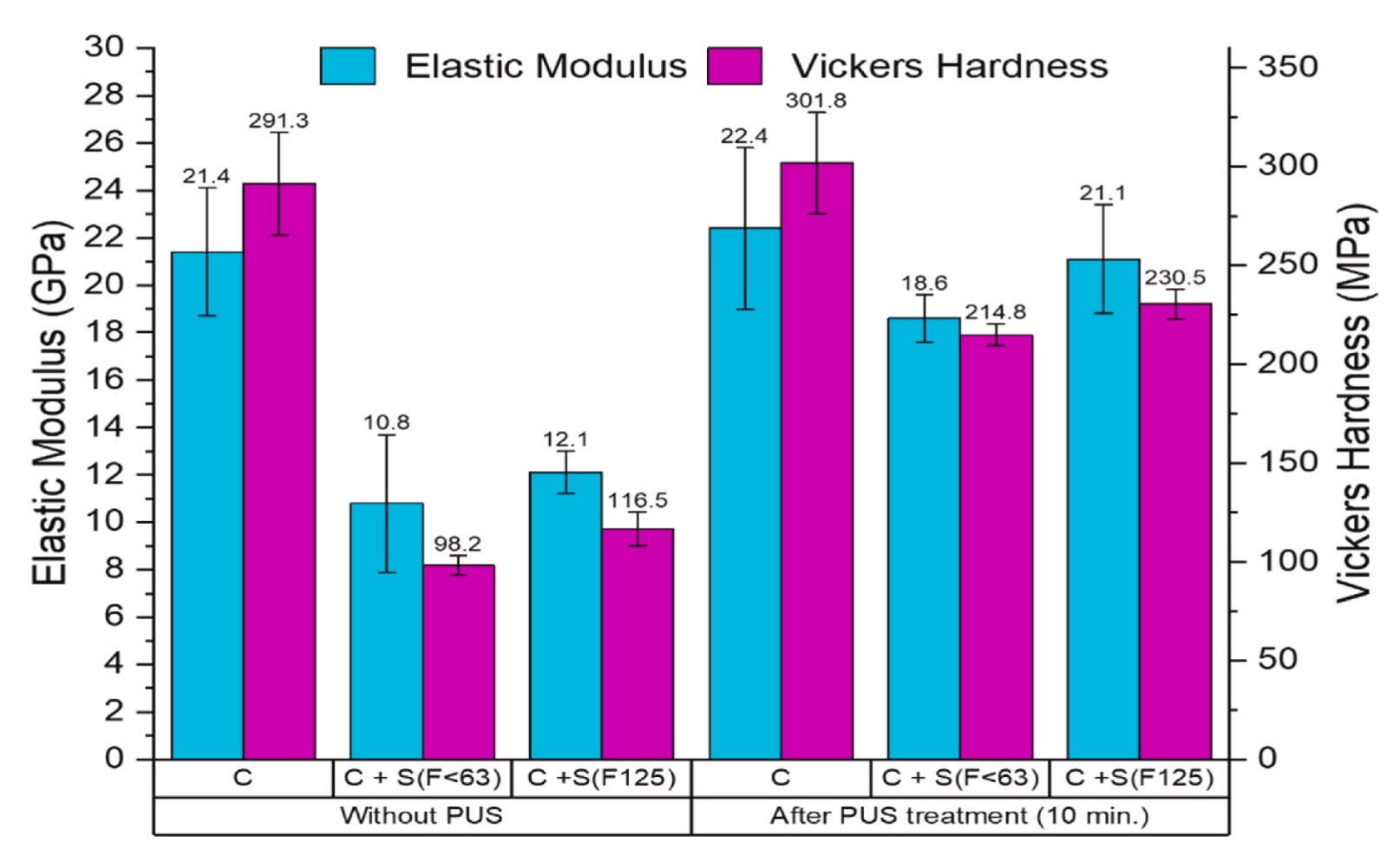
Твёрдость по Викеру и модуль упругости паст C + S, приготовленных традиционным способом и с использованием мощного ультразвука, через 28 дней.
Графики и исследование: ©Lisowski и др., 2024.
Повышенная раннея прочность цементного раствора с добавкой GBFS
Одним из важнейших результатов для промышленного применения цемента и строительных растворов является повышение прочности в ранний период. Согласно данным Лисовски и др. (2024), импульсная ультразвуковая обработка цементных паст, содержащих 20 % осажденного GBFS, обеспечила значительно более высокую прочность уже через два дня. Сообщалось о повышении прочности на сжатие до 132 % и прочности на изгиб до 58 %.
Это особенно актуально для сборного железобетона, сухих строительных смесей, ремонтных растворов, клеев для плитки и других цементных изделий, в случае которых раннее извлечение из опалубки, раннее достижение прочности, необходимой для перемещения, или быстрый ход строительства имеют важное экономическое значение.
Увеличение прочности коррелировало с ростом суммарной теплоты затвердевания, что свидетельствует о том, что ультразвуковая обработка не только улучшает физическую дисперсию, но и усиливает раннюю гидратацию. С практической точки зрения это означает, что мощный ультразвук может помочь производителям более эффективно использовать шлак без ущерба для ранних эксплуатационных характеристик.
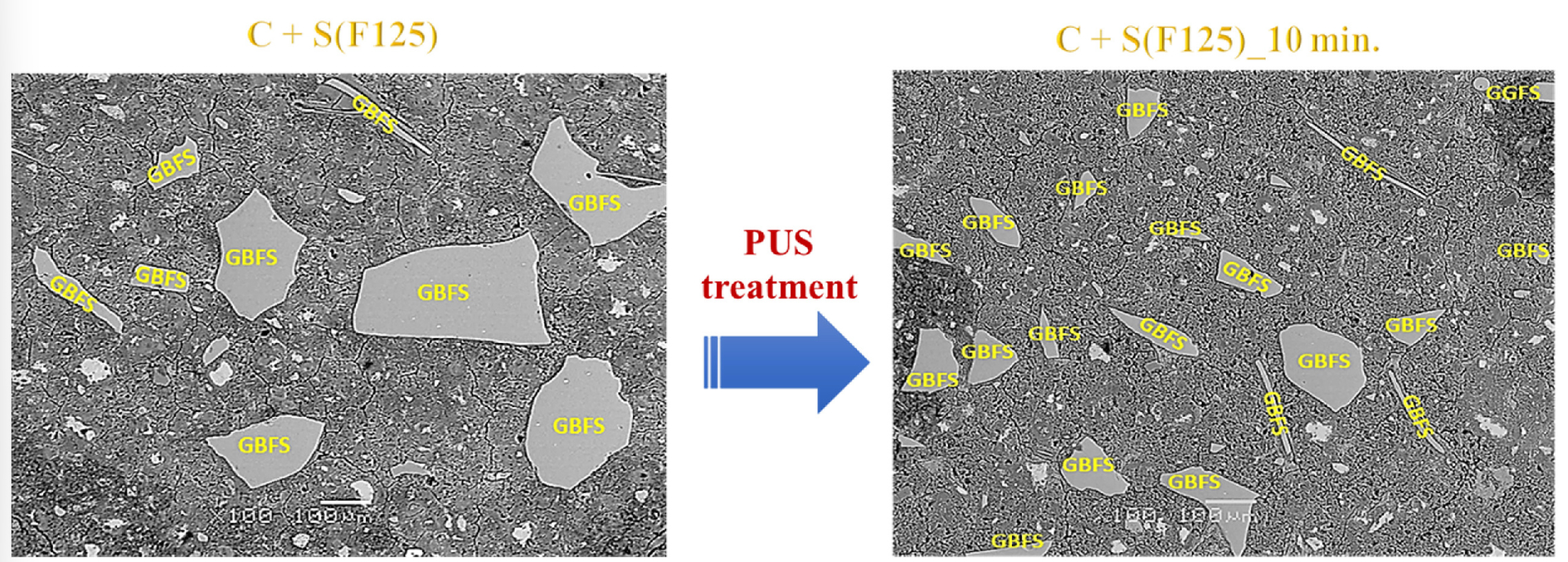
Изображения, полученные с помощью сканирующего электронного микроскопа (SEM), образцов цементно-GBFS-пасты C + S: сравнение результатов без и с применением мощного ультразвука на 28-й день.
Иллюстрации и исследование: ©Lisowski и др., 2024.
Сонофрагментация повышает полезность крупнозернистых фракций шлака
 Особенно ценным результатом является эффективная активация относительно крупных фракций GBFS. В ходе исследования было установлено, что фракция шлака размером 125–250 мкм обеспечивала наилучшую прочность в ранний период и через 28 дней при сочетании сепарации осажденных частиц шлака и обработки мощным ультразвуком.
Это имеет важное промышленное значение, поскольку измельчение шлака до очень мелких фракций является энергоемким процессом. Если ультразвуковая обработка повышает реакционную способность более крупных или осажденных фракций GBFS, производители смогут сократить потребность в измельчении, повысить эффективность использования сырья и более рационально использовать вторичные потоки материалов.
Узнайте, как ультразвуковая дисперсия способствует производству наноармированных цементных растворов!
Практическое значение для промышленности: использование мощного ультразвука для эффективного производства цемента и строительных растворов
Для промышленных производителей цемента и строительных растворов ультразвуковая обработка предоставляет ряд стратегических преимуществ. Её можно интегрировать в качестве этапа интенсификации процесса на этапах приготовления суспензии, активации вяжущего, диспергирования добавок или смешивания высокоэффективных строительных растворов. Данная технология особенно привлекательна для продукции, качество которой зависит от распределения мелких частиц, быстрой гидратации и оптимального использования цементозаменителей.
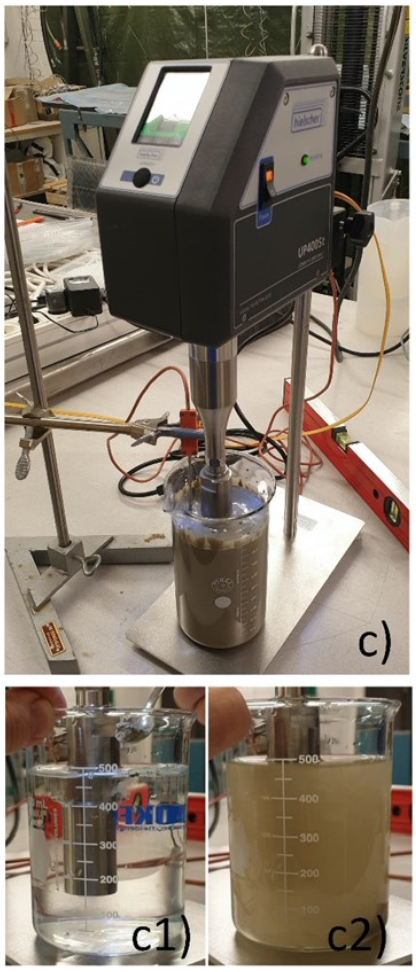
Ультразвуковая аппарат зондового типа UP400St для диспергирования микротонкого цементного раствора
(Исследование и изображение: ©Draganovic et al., 2020)
- Более высокая начальная прочность без увеличения содержания клинкерного компонента
- Более эффективная активация GBFS и других цементозаменителей
- Более эффективное использование крупнозернистых фракций шлака или отложившегося шлака
- Снижение агломерации в цементных суспензиях
- Более стабильные характеристики гидратации и отверждения
- Возможное снижение интенсивности измельчения для отдельных потоков шлака
- Повышение эксплуатационных характеристик цементных смесей с низким содержанием клинкерного компонента и углерода
Благодаря этому ультразвуковая обработка приобретает большое значение для производства экологически безопасного цемента, шлакового цемента, высокоэффективных строительных растворов, сборных элементов, ремонтных материалов и специальных строительных изделий.
Ультразвуковая обработка как инструмент для разработки низкоуглеродных цементных технологий
Цементная промышленность сталкивается с необходимостью сокращения выбросов CO₂, и снижение коэффициента клинкерности является одним из наиболее прямых путей достижения этой цели. Однако увеличение доли заменителей, таких как GBFS, летучая зола, прокаленная глина или другие цементозаменители, может замедлить набор ранней прочности. Мощный ультразвук может помочь преодолеть это препятствие за счет улучшения дисперсии, активации частиц и ускорения ранней гидратации.
Ультразвуковая обработка может повысить реакционную способность и механическую прочность цементных паст с добавлением шлака, особенно если процесс оптимизирован с учетом фракционного состава частиц и времени обработки. Такое сочетание факторов имеет большое значение для разработки вяжущих материалов в промышленных масштабах.
Ультразвуковые аппараты Hielscher для ускорения гидратации цемента, повышения прочности и реакционной способности шлака
 Установки для ультразвуковой обработки Hielscher, работающие в потоке, представляют собой мощный инструмент для улучшения гидратации и прочности цемента, особенно в цементных системах с добавлением шлака.
Для деагломерации и диспергирования промышленного цемента высокопроизводительные ультразвуковые устройства компании Hielscher обеспечивают интенсивное кавитационное сдвиговое воздействие, необходимое для разбивания агломератов цемента, шлака и минеральных наполнителей на мелкодисперсные частицы, что способствует улучшению смачиваемости частиц, активации поверхности и однородности цементных суспензий. Системы Hielscher представлены в широком диапазоне — от настольных и пилотных установок до надёжных высокопроизводительных производственных систем, включая мощные поточные ультразвуковые устройства для непрерывной обработки цементных растворов и минеральных суспензий. Это позволяет напрямую масштабировать разработку технологического процесса от этапа R&D до полной промышленной производительности. Благодаря устранению или сокращению потребности в измельчающих телах ультразвуковая деагломерация упрощает технологический процесс, сводит к минимуму риски загрязнения и снижает трудозатраты на очистку, обеспечивая при этом воспроизводимое качество дисперсии. Таким образом, для производителей цемента и строительных растворов ультразвуковые аппараты Hielscher предлагают практический путь к получению более однородных вяжущих систем, улучшению кинетики гидратации, более эффективному использованию GBFS и других цементозаменителей, а также к созданию высокоэффективных рецептур с низким содержанием клинкера.
В приведенной ниже таблице представлены ориентировочные данные о производительности наших систем силового ультразвука:
| Объем партии | Расход | Рекомендуемые устройства |
|---|---|---|
| от 50 мл до 20 л | 0от 1 до 2 л/мин | УИП1000HDT |
| 0.1 до 20 л | 0от 0,2 до 4 л/мин | УИП2000HDT |
| От 10 до 100 л | От 2 до 10 л/мин | УИП4000HDT |
| От 15 до 150 л | От 3 до 15 л/мин | УИП6000HDT |
| н.а. | От 10 до 100 л/мин | УИП16000HDT |
| н.а. | больше | Кластер УИП16000HDT |
Проектирование, производство и консалтинг – Качество «Сделано в Германии»
Ультразвуковые аппараты Hielscher хорошо известны своими высочайшими стандартами качества и дизайна. Надежность и простота в эксплуатации позволяют без проблем интегрировать наши ультразвуковые аппараты в промышленные объекты. Ультразвуковые аппараты Hielscher легко справляются с суровыми условиями и требовательными условиями окружающей среды.
Hielscher Ultrasonics является компанией, сертифицированной по стандарту ISO, и уделяет особое внимание высокопроизводительным ультразвуковым аппаратам, отличающимся самыми современными технологиями и удобством в использовании. Конечно, ультразвуковые аппараты Hielscher соответствуют требованиям CE и соответствуют требованиям UL, CSA и RoHs.

Hielscher Ultrasonics производит высокопроизводительные ультразвуковые гомогенизаторы для смешивания, диспергирования, эмульгирования и экстракции в лабораторном, пилотном и промышленном масштабе.
Часто задаваемые вопросы
Что такое C-S-H-зародышеобразование в бетоне?
Зародышеобразование C-S-H — это начальное образование гидрата силиката кальция на поверхности частиц в процессе гидратации цемента. C-S-H является основным гидратационным продуктом, определяющим прочность в системах портландцемента, а процесс его зародышеобразования определяет раннее развитие микроструктуры, время схватывания и прочность.
Что такое клинкер в цементе?
Клинкер — это спеченный промежуточный продукт, получаемый в результате нагрева известняка, глины и других сырьевых материалов в цементной печи до высокой температуры. Он состоит в основном из фаз силиката кальция и алюмината кальция, которые измельчаются вместе с гипсом для получения портландцемента.
Что такое гранулированный доменный шлак?
Гранулированный доменный шлак (GBFS) — это стеклообразный побочный продукт производства чугуна, получаемый в результате быстрого охлаждения расплавленного доменного шлака водой или воздухом. При тонком измельчении он действует как латентный гидравлический цементозаменитель, который в цементных системах вступает в реакцию с образованием дополнительных C-S-H и способствует повышению долговечности и долгосрочной прочности.
Литература / Литература
- Peters S., Stöckigt M., Rößler C. (2009): Influence of power-ultrasound on the fluidity and setting of Portland cement pastes. In: Proceedings of the 17th International Conference on Building Materials (ibausil). Vol 1. Weimar, Germany; 2009. 259-264.
- Paweł Lisowski, Daria Jóźwiak-Niedźwiedzka, Magdalena Osial, Kamil Bochenek, Piotr Denis, Michał A. Glinicki (2024): Power ultrasound-assisted enhancement of granulated blast furnace slag reactivity in cement paste. Cement and Concrete Composites, Volume 154, 2024.
- Peters, S.; Kraus, M.; Rößler, Christiane; Ludwig, H.-M. (2011): Workability of cement suspensions Using power ultrasound to improve cement suspension workability. Betonwerk und Fertigteil-Technik/Concrete Plant and Precast Technology. 77, 2011. 26-33.
- Almir Draganović, Antranik Karamanoukian, Peter Ulriksen, Stefan Larsson (2022): Ultrasonic dispersion of hard dispersed ultrafine milled cement-based grout for water sealing of fractured hard rock. Construction and Building Materials, Volume 317, 2022.
- Almir Draganović, Antranik Karamanoukian, Peter Ulriksen, Stefan Larsson (2020): Dispersion of microfine cement grout with ultrasound and conventional laboratory dissolvers. Construction and Building Materials, Volume 251, 2020.

Обработка цементной пасты с помощью ультразвуковых аппаратов Hielscher в непрерывном проточном процессе.
- Высокая эффективность
- Современные технологии
- надёжность & робастность
- Регулируемое, точное управление процессом
- партия & встроенный
- для любого объема
- Интеллектуальное программное обеспечение
- интеллектуальные функции (например, программируемые, протоколирование данных, дистанционное управление)
- Простота и безопасность в эксплуатации
- Низкие эксплуатационные расходы
- CIP (безразборная мойка)
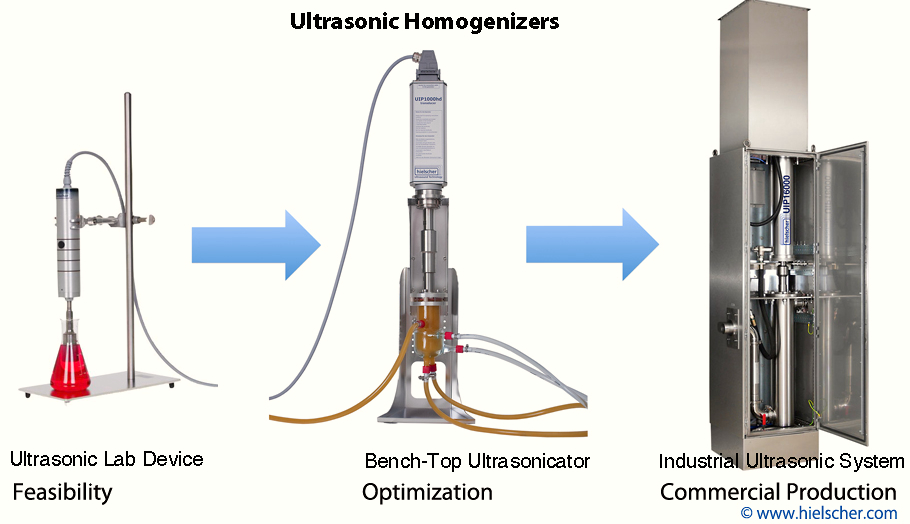
Hielscher Ultrasonics производит высокопроизводительные ультразвуковые гомогенизаторы от лаборатория Кому промышленного размера.