Sono-Electrowinning արդյունաբերական մետաղների արդյունահանման համար
As global demand for copper, nickel, cobalt, zinc, silver, gold, rare metals, and battery-relevant materials continues to rise, metal producers are under pressure to recover more value from ores, concentrates, tailings, recycled streams, and low-grade feedstocks. In hydrometallurgy, one of the most established routes for metal recovery is electrowinning, also known as electroextraction: dissolved metal ions are recovered from a leach solution by applying an electrical current, which reduces the ions and deposits the metal onto a cathode.
Sono-Electrowinning for Improved Hydrometallurgical Metal Recovery
Sono-electrowining-ը առաջ է տանում այս սկզբունքը՝ համատեղելով էլեկտրավինինգը բարձր ինտենսիվության ուլտրաձայնային հետ: Արդյունքը սոնոէլեկտրաքիմիական գործընթաց է, որի ժամանակ ակուստիկ կավիտացիան, միկրոհոսքը եւ էլեկտրաքիմիական կրճատումը գործում են միասին։ Միայն էլեկտրական պոտենցիալի եւ սովորական էլեկտրոլիտների շրջանառության վրա ապավինելու փոխարեն, սոնո-էլեկտրովինինգը ներմուծում է ինտենսիվ տեղային խառնուրդներ անմիջապես էլեկտրոդի ինտերֆեյսում կամ նրա մոտակայքում, որտեղ իրականում տեղի է ունենում մետաղի տեղադրումը։ Ուլտրաձայնային լայնորեն հաղորդվում է, որ բարձրացնում է զանգվածային տրանսպորտը, խանգարում է դիֆուզիոն շերտը, մաքրում է էլեկտրոդների մակերեսները, հեռացնում է գազի փուչիկները եւ աջակցում է ավելի բարձր էլեկտրաքիմիական տեմպերին:

Electro-Sonication Օգտագործելով Sonotrode եւ ռեակտորի պատը որպես էլեկտրոդներ:

Սոնո-էլեկտրոդներ. 2 ալտրաձայնային փոխանցիչներ, համապատասխանաբար, անում են անոդի և կատոդի շահագործում: Սոնո-էլեկտրոդները կամ սոնո-էլեկտրոդային probes-ը գործում են միաժամանակ որպես էլեկտրոդներ և ալտրաձայնային probes ավելի լավ էլեկտրալեռնման համար.
From Ore to Cathode: How Sono-Electrodeposition Works
Industrial electrowinning usually begins with leaching. In this upstream step, the target metal is dissolved from an ore, concentrate, process residue, slag, black mass, electronic waste, or other metallurgical feedstock into an aqueous solution. Depending on the metal and ore chemistry, the leachant may be acidic, alkaline, chloride-based, sulfate-based, cyanide-based, ammoniacal, organic-acid-based, or otherwise chemically tailored to dissolve the valuable metal phase.
Հետո leaching, հղի leach լուծույթը սովորաբար պարզաբանվում է, մաքրվում եւ ճշգրտվում է pH-ի, ջերմաստիճանի, ջերմաստիճանի, մետաղի կոնցենտրացիայի եւ impurity պրոֆիլի համար: Էլեկտրական բջջում այս մետաղ պարունակող էլեկտրոլիտը հոսում է անոդի եւ կաթոդի միջեւ։ Երբ կիրառվում է վերահսկվող հոսանք, լուծված մետաղական իոնները տեղափոխվում են եւ կրճատվում կաթոդի մակերեւույթում, որտեղ ձեւավորում են պինդ մետաղական նստվածք։ Sono-electrowinning-ում ուլտրաձայնը ներմուծվում է այս էլեկտրաքիմիական միջավայրում, այնպես որ ակուստիկ էներգիան ուժեղացնում է իոնների տեղափոխումը եւ էլեկտրոդի սահմանային շերտի նորացումը:
Պարզ ասած, գործընթացի հաջորդականությունը հետեւյալն է:
- Լվացում՝ Արժեքավոր մետաղները լուծվում են հանքաքարից կամ երկրորդային հումքից լուծույթի մեջ.
- Լուծույթ կոնդիցիոներ: Ալյուրաջրի լուծույթը մաքրում են կամ կարգավորում կարողությունները և նստվածքի վարքի բարելավման համար։
- Սոնո-էլեկտրաքիմիական նստվածք։ Ուլտրաձայնն ու էլեկտրական հոսանքը միաժամանակ գործում են էլեկտրակաղտնարժեքի բջիջում։
- Կաթոդի վերականգնում։ Ոսկեգործական նստվածքները հավաքվում են թերթիկների, փոշու, սպոնջի, թաղանթի կամ մյուս նստվածք ձևերի տեսքով՝ կախված ընթացակարգի դիզայնից։
- Էլեկտրոլիտների կրկնակի շրջանառում։ Մնացած էլեկտրոլիտը կարող է վերականգնվել, վերամշակվել կամ վերադարձվել հիդրոմետալուրգիական համակարգ։

Inline սոնո-էլեկտրաքիմիական կազմավորում
Ինչու է սոնիկացիան բարելավում էլեկտրավարչումը
 The main bottleneck in many electrowinning systems is not only the electrical reaction itself. It is the supply of fresh metal ions to the cathode surface, the removal of reaction products and gas bubbles, and the maintenance of an active, clean, homogeneous electrode interface. Ultrasound directly addresses these limitations.
When high-power ultrasound enters the electrolyte, it creates acoustic cavitation: microscopic bubbles form, oscillate, and collapse. These collapses generate microjets, shock waves, and intense local shear. In liquid-phase processing, this can produce localized mixing, micro-mixing, dispersion, deagglomeration, and accelerated interfacial transport.
Hielscher ultrasonic and sono-electro-technology is positioned around controlled acoustic cavitation for liquid processing, where ultrasonic waves generate cavitation fields that produce shear, shock waves, microjets, and reproducible energy transfer into fluids, suspensions, and slurries.
In electrowinning, these effects are especially valuable because the electrochemical reaction happens at a surface. Ultrasound can reduce concentration gradients near the electrode, compress or disrupt the diffusion layer, and bring fresh metal ions continuously to the cathode. Recent work on ultrasound-enhanced electrochemical mass transport describes current enhancement through diffusion-layer compression driven by acoustic streaming, while research on ultrasound-assisted electrodeposition reports improved ion transport through cavitation, microflow, and acoustic pressure effects.
The Synergy: Sonication Plus Electrochemistry
The advantage of sono-electrowinning is not merely that ultrasound “stirs” the solution. Hielscher Sono-Electro-Probes combine ultrasonic probes and electrodes that simultaneously introduces high-intensity ultrasound and electrical current into an electrochemical system. Hereby, the key is the synergetic coupling of two energy fields: electrical energy drives the metal-ion reduction reaction, while acoustic energy improves the physical and interfacial conditions under which that reaction takes place.
This synergy can create several industrially relevant benefits:
- Higher mass transfer: Sonication improves the supply of dissolved metal ions to the cathode surface, reducing local depletion.
- Cleaner electrode surfaces: Cavitation and acoustic streaming help remove passivating films, loosely attached particles, gas bubbles, and reaction products.
- Բարելավված ներկայիս արդյունավետության հնարավորություն: Ակտիվացված էլեկտրոդային ինտերֆեյսը կարող է նվազեցնել կոնցենտրացիոն պոլարիզացիայից և մակերեսային արգելափակումից առաջացող կորուստները, չնայած վերջնական արդյունավետությունը կախված է էլեկտրոլիտի քիմիայից և շահագործման պարամետրերից:
- Ավելին, ավելի համաչափ նստվածք: Ուլտրաձայնային աջակցությամբ էլեկտրոդեպոզիցիան կապված է ավելի հարթ, խիտ, ավելի համաչափ նստվածքների և մանր հատիկների կառուցվածքների հետ:
- Ավելի արագ էլեկտրոդեպոզիցիայի կինետիկա: Բարելավված զանգվածային փոխանցումն ու մակերեսային ակտիվացումը կարող են թույլ տալ ավելի բարձր նստվածքային տեմպեր օպտիմալացված պայմաններում:
- Նվազեցված դիֆուզիոն սահմանափակումներ: Ելելով էլեկտրոդի սահմանային շերտը խանգարելու միջոցով, ուլտրաձայնը կարող է աջակցել ավելի միասնական նստվածքի, նույնիսկ երբ մետաղների կոնցենտրացիաները հարաբերաբար ցածր են:
- Լավ կառավարման ունակություն բարդ էլեկտրոլիտների հետ: Ultrasonic agitation can support the processing of suspensions, fine particles, and difficult leach liquors by improving dispersion and reducing localized stagnation.
This makes sono-electrowinning particularly attractive for hydrometallurgical circuits where conventional electrowinning is limited by slow kinetics, poor deposit morphology, concentration polarization, electrode fouling, gas bubble coverage, or low metal-ion concentration.
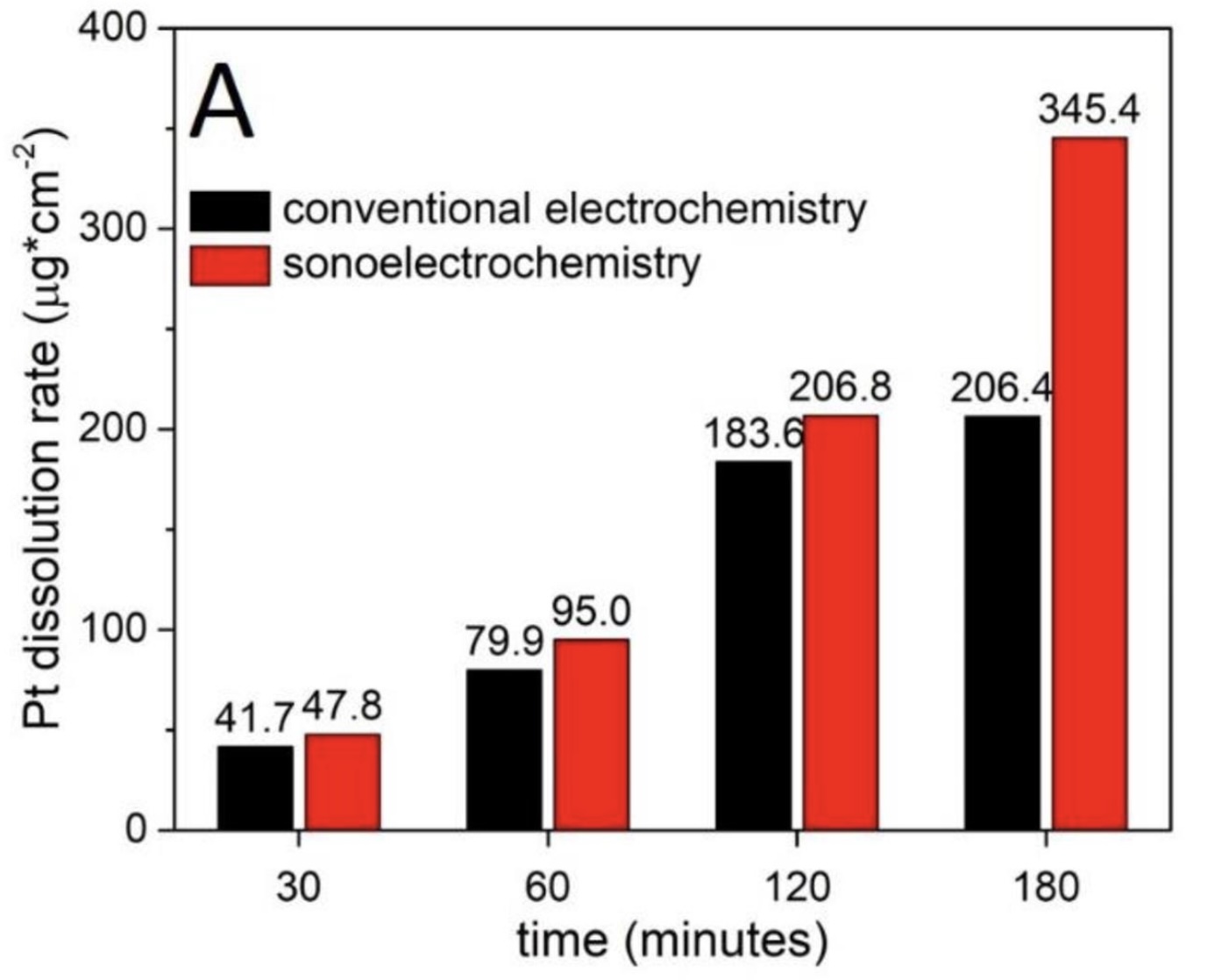
Conventional vs sonoelectrochemical dissolution rates of Pt electrodes.
Study and graphs: ©Vasile et al., 2021
Արդյունաբերական օգուտներ մետաղի արդյունահանման համար
Մետաղների արդյունահանման արդյունաբերական գործընթացում, սոնո-էլեկտրաուինինգի արժեքը կայանում է գործընթացի ինտենսիվացման մեջ: Ավելի շատ մետաղ հնարավոր է վերականգնել ավելի կարճ ժամանակում` բարելավված նստվածքի չափաբաշխությամբ և ավելի կայուն բջջային աշխատանքով, այն պայմանով, որ ճիշտ հարմարեցված լինեն սոնիկացման ուժը, էլեկտրոդների գեոմետրիան, էլեկտրոլիտի կազմը և հոսանքի խտությունը.
Առաջարկվել է պրակտիկայում, սոնո-էլեկտրաուինինգը աջակցում է:
- Վերականգնում ցածր դասի հանքային լուծույթներից: Լավացված զանգվածային փոխանցումը կարող է աջակցել նստվածքների պահպանմանը, երբ լուծված մետաղների կոնցենտրացիաները իդեալական չեն.
- Բարելավված կաթոդի որակ: Հարթ և ավելի համաչափ նստվածքները կարող են հեշտացնել հետագա շերտազատումը, հալումը, Raffinա-մաքրմանը կամ փոշու մշակումը.
- Նվազագույն կեղտոտման միտում: Continuous surface renewal can reduce the impact of passivation and unwanted surface films.
- More compact process design: Faster kinetics may allow smaller cells or higher throughput, depending on the process chemistry.
- Enhanced recovery from secondary resources: Battery black mass, electronic waste, catalysts, slags, and industrial residues often generate complex leach solutions where intensified mass transfer is valuable.
- Better process controllability: Modern ultrasonic systems can be integrated into batch or continuous inline setups and tuned via amplitude, residence time, flow rate, temperature, and energy input.
Hielscher sono-electro-systems are unique: The sono-electrode acts simultaneously as ultrasonic probe and electrode. The sono-electro-setups are designed around scalable liquid processing from laboratory testing to pilot operation and industrial inline production. High power ultrasound, 24/7 continuous-operation capability, industrial-grade robustness and low maintenance make Hielscher sono-electro-systems ideal for industrial sono-electrowinning.
Linear scale-up through controlled parameters such as amplitude, energy input, flow rate, temperature, and residence time facilitate the increase in production capacities significantly.
Sono-Electrowinning in the Leaching–Electrowinning Chain
In a conventional hydrometallurgical plant, electrowinning is often positioned after leaching, solid-liquid separation, purification, and sometimes solvent extraction or ion exchange. Sono-electrowinning can be integrated into this downstream recovery step to intensify the conversion of dissolved metal ions into solid metal.
A typical process pathway may look like this:
- Crushed ore, concentrate, tailings, or secondary raw material is leached to dissolve the target metal.
- Insoluble gangue, residual solids, and unwanted phases are removed or reduced.
- The pregnant leach solution is chemically adjusted for selective electrowinning.
- The electrolyte is fed into an electrowinning cell equipped with sono-electrodes and circulation.
- Սոնիկացիան բարելավում է իոնների տեղափոխումը և էլեկտրոնային մակերեսի վերականգնումը, մինչ կիրառվող հոսանքը մետաղը լցնում է կաթոդի վրա։
- Մետաղի արտադրանքը հավաքվում է, իսկ էլեկտրոլիտը վերամշակվում է կամ ուղարկվում հետագա մշակման։
Այս համադրությունը հատկապես հետաքրքիր է այն դեպքերում, երբ մետաղի արդյունահանման արդյունաբերությունը պետք է մշակի ավելի բարդ ռեսուրսները։ Շատ ապագա հումքային նյութերը պարունակում են ավելի ցածր մետաղի մակարդակ, ավելի շատ աղտոտում, ավելի մանրացրած մասնիկներ, խառեցված քիմիաներ կամ փոփոխական կազմ։ Սոնո-էլեկտրոլվինինգը առաջարկում է ճանապարհ՝ էլեկտրոլիտի և էլեկտրոդի մակերեսի միջև փոխազդեցությունը բարելավելով, էլեկտրաքիմիական վերականգնման քայլը ավելի մաքսիմալ դարձնելու համար։

Ուլտրաձայնային զոնդը գործում է որպես էլեկտրոդ: Ուլտրաձայնային ալիքները խթանում են էլեկտրաքիմիական ռեակցիաները, որոնք հանգեցնում են բարելավված արդյունավետության, բարձր եկամտաբերության և փոխակերպման ավելի արագ տեմպերի:
Sonoelectrochemistry-ն զգալիորեն բարելավում է էլեկտրոդեզոնավորման գործընթացները:
Սոնո-էլեկտրաքիմիական մետաղի վերականգնում՝ ավելի բարձր բերքվարձույթներ ավելի ցածր մշակման ծախսերով
Electrowinning is already a cornerstone of hydrometallurgy because it can recover metals from aqueous solutions as high-value solid products. Sono-electrowinning improves conventional electroextraction by improving recovery efficiency, current efficiency, and energy consumption.
The synergistic effects of power ultrasound and electrowinning address the physical limitations of the electrochemical interface and supports more intensive, controlled, and potentially more efficient metal recovery. For mining, recycling, and metallurgical operations, the technology helps bridging the gap between increasingly complex feedstocks and the need for cleaner, more selective, higher-throughput extraction routes.
Sono-Electrowinning as a Process-Intensification Tool
The future of metal extraction will depend on recovering more metal from more difficult resources. High-grade ores are declining in many regions, while demand for copper, nickel, cobalt, lithium-related metals, precious metals, and rare elements is increasing. At the same time, industry is expanding its focus from primary ores to secondary resources such as spent batteries, electronic scrap, catalysts, industrial residues, and process waters.
Sono-electrowinning offers a compelling process-intensification strategy for this landscape. By combining the selectivity of electrochemical metal recovery with the interfacial power of ultrasonic cavitation, it can improve mass transfer, electrode activity, deposit morphology, and process robustness. For industrial operators, this means a stronger route from leached metal ions to recoverable metal product.
In short, sono-electrowinning turns the cathode surface into a more dynamic reaction zone. Sonication keeps the electrochemical interface active; electrochemistry converts dissolved ions into metal; and together they create a powerful platform for modern hydrometallurgical extraction.
High-Performance Sono-Electro-Probes and SonoElectroReactors
Hielscher Ultrasonics-ը ձեր երկարամյա փորձառու գործընկերն է բարձր արդյունավետության ուլտրաձայնային համակարգերի համար: Մենք արտադրում և տարածում ենք գերժամանակակից ուլտրաձայնային զոնդեր և ռեակտորներ, որոնք օգտագործվում են ամբողջ աշխարհում՝ պահանջկոտ միջավայրերում ծանր կիրառման համար: Սոնոէլեկտրոքիմիայի համար Hielscher-ը մշակել է հատուկ ուլտրաձայնային զոնդեր, որոնք կարող են գործել որպես կաթոդ և/կամ անոդ, ինչպես նաև ուլտրաձայնային ռեակտորային բջիջներ, որոնք հարմար են էլեկտրաքիմիական ռեակցիաների համար: Ուլտրաձայնային էլեկտրոդները և բջիջները հասանելի են գալվանական/վոլտային, ինչպես նաև էլեկտրոլիտիկ համակարգերի համար:
Կապվեք մեզ հետ հիմա և պատմեք մեզ ձեր էլեկտրաքիմիական գործընթացի պահանջների մասին: Մենք ձեզ խորհուրդ կտանք ամենահարմար ուլտրաձայնային էլեկտրոդները և ռեակտորի կարգավորումները:
Կապ մեզ հետ: / Հարցրեք մեզ:

Hielscher Ultrasonics-ը արտադրում է բարձր արդյունավետության ուլտրաձայնային հոմոգենիզատորներ՝ լաբորատոր, փորձնական և արդյունաբերական մասշտաբով կիրառական կիրառությունների խառնուրդի, ցրման, էմուլսացման և արդյունահանման համար:
Հաճախակի տրվող հարցեր
Ի՞նչ է Electrowinning?
Electrowining-ը էլեկտրաքիմիական մետաղների վերականգնման գործընթաց է, որի ժամանակ լուծված մետաղական իոնները կրճատվում են ջրային էլեկտրոլիտից եւ տեղադրվում են որպես պինդ մետաղ կաթոդի վրա: Մետաղական լուծույթը սովորաբար արտադրվում է հանքաքարերի, խտանյութերի, մնացորդների կամ վերամշակված նյութերի լվացման միջոցով, որից հետո կիրառվող էլեկտրական հոսանքը խթանում է թիրախային մետաղի ընտրովի վերականգնումը:
What is a Sono-Electro-Probe?
Սոնո-էլեկտրոդային probe-ը միացյալ ուլտրաձայնային probe և էլեկտրոդ է, որը միաժամանակ բարձր ինտենսիվությամբ ուլտրաձայն և էլեկտրական հոսանք է մտցնում էլեկտրոկիմիական համակարգում։ Որպես սոնո-էլեկտրոդ, այն ստեղծում է ձայնային կավիտացիա և միկրոստրիմինգ էլեկտրոդի մակերևույթի վրա կամ դրա մոտ, ինչը բարելավում է զանգվածային փոխադրումը, խախտում է դիֆուզիոն շերտերը, հեռացնում գազային բաբլիկները կամ պասիվացնող ֆիլմերը, և այդպիսով բարձրացնում է էլեկտրոկիմիական ռեակցիաները, ինչպիսիք են էլեկտրոդեպոզիցիան, էլեկտրալվինը, էլեկտրոկսիդացումը և էլեկտրակենսազրկումը։
Սոնոէլեկտրոքիմիայի կիրառությունները ինչպիսի՞ն են։
Սոնոէլեկտրոքիմիան կարող է կիրառվել տարբեր գործընթացների և արդյունաբերության տարբեր ոլորտներում: Սոնոէլեկտրոքիմիայի շատ տարածված կիրառությունները ներառում են հետևյալը.
- Նանոմասնիկների սինթեզ (էլեկտրասինթեզ)
- ջրածնի սինթեզ
- էլեկտրակոագուլյացիա
- Կեղտաջրերի մաքրում
- օհմիկ ջեռուցում
- Կոտրող էմուլսիաներ
- Էլեկտրապատում / Էլեկտրականացում
Գրականություն / Հղումներ
- Eugeniu Vasile, Adrian Ciocanea, Viorel Ionescu, Ioan Lepadatu, Cornelia Diac, Serban N. Stamatin (2021): Ոսկի և թանկարժեք մետաղները դարձնել մատչելի։ A sonoelectrochemical – Hydrodynamic cavitation method to recycle platinum group metals from spent automotive catalysts. Ultrasonics Sonochemistry, Volume 72, 2021.
- Sherif S. Rashwan, Ibrahim Dincer, Atef Mohany, Bruno G. Pollet (2019): The Sono-Hydro-Gen process (Ultrasound induced hydrogen production): Challenges and opportunities. International Journal of Hydrogen Energy, Volume 44, Issue 29, 2019, 14500-14526.
- Yurdal K.; Karahan İ.H. (2017): A Cyclic Voltammetry Study on Electrodeposition of Cu-Zn Alloy Films: Effect of Ultrasonication Time. Acta Physica Polonica Vol 132, 2017. 1087-1090.
- Mason, T.; Sáez Bernal, V. (2012): An Introduction to Sonoelectrochemistry In: Power Ultrasound in Electrochemistry: From Versatile Laboratory Tool to Engineering Solution, First Edition. Edited by Bruno G. Pollet. 2012 John Wiley & Sons, Ltd.
- Haas, I.: Gedanken A. (2008): Synthesis of metallic magnesium nanoparticles by sonoelectrochemistry. Chemical Communications 15(15), 2008. 1795-1798.
- Ashassi-Sorkhabi, H.; Bagheri R. (2014): Sonoelectrochemical and Electrochemical Synthesis of Polypyrrole Films on St-12 Steel and Their Corrosion and Morphological Studies. Advances in Polymer Technology Vol. 33, Issue 3; 2014.
- Սոնո-էլեկտրաքիմիական սինթեզը բարելավում է քիմիական արտադրության արդյունավետությունը

Ուլտրաձայնային UIP2000hdT (2000 վտ, 20 կՀց) որպես կաթոդ և/կամ անոդ տանկի մեջ