Nano-lubrifianți îmbunătățiți prin dispersie cu ultrasunete
Integrarea nano-aditivilor în formulele lubrifianților reprezintă unul dintre cele mai semnificative progrese înregistrate în tribologie în ultimii ani. Cu toate acestea, cercetătorii și inginerii de proces se confruntă cu o provocare persistentă: obținerea unei dispersii omogene a particulelor la scară nanometrică în uleiurile de bază vâscoase, fără a le afecta integritatea structurală. Metodele tradiționale de amestecare nu reușesc adesea să descompună eficient aglomeratele, ceea ce duce la performanțe inconsistente ale produsului și la o stabilitate limitată la depozitare.
Soluția: Dispersarea nano-aditivilor prin ultrasunete în compoziția lubrifianților
Ultrasunetele de mare putere reprezintă soluția optimă pentru aceste provocări legate de dispersie. Folosind principiile cavitației acustice, echipamentele cu ultrasunete generează cicluri alternante de înaltă și joasă presiune în mediile lichide. În timpul ciclului de joasă presiune, în lichid se formează mici bule de vid. Când aceste bule ating volumul maxim și nu mai pot absorbi energie, ele se sparg violent în timpul ciclului de înaltă presiune. Această spargere generează condiții extreme localizate – temperaturi care ating aproximativ 5000 de Kelvin și presiuni care depășesc 1000 de atmosfere – care dezaglomerează în mod eficient aglomeratele de nanoparticule și asigură o distribuție uniformă în întreaga matrice a lubrifiantului.
Pentru inginerii de proces, aceasta înseamnă diferența dintre un lubrifiant care se depune și se separă în câteva săptămâni și unul care își menține profilul de performanță pe întreaga durată de viață a componentei.

Dispersor cu ultrasunete UIP2000hdT pentru producția industrială de lubrifianți
Studiu de caz: Nanotuburi de carbon de tip bambus dopate cu azot în unsoare conductive
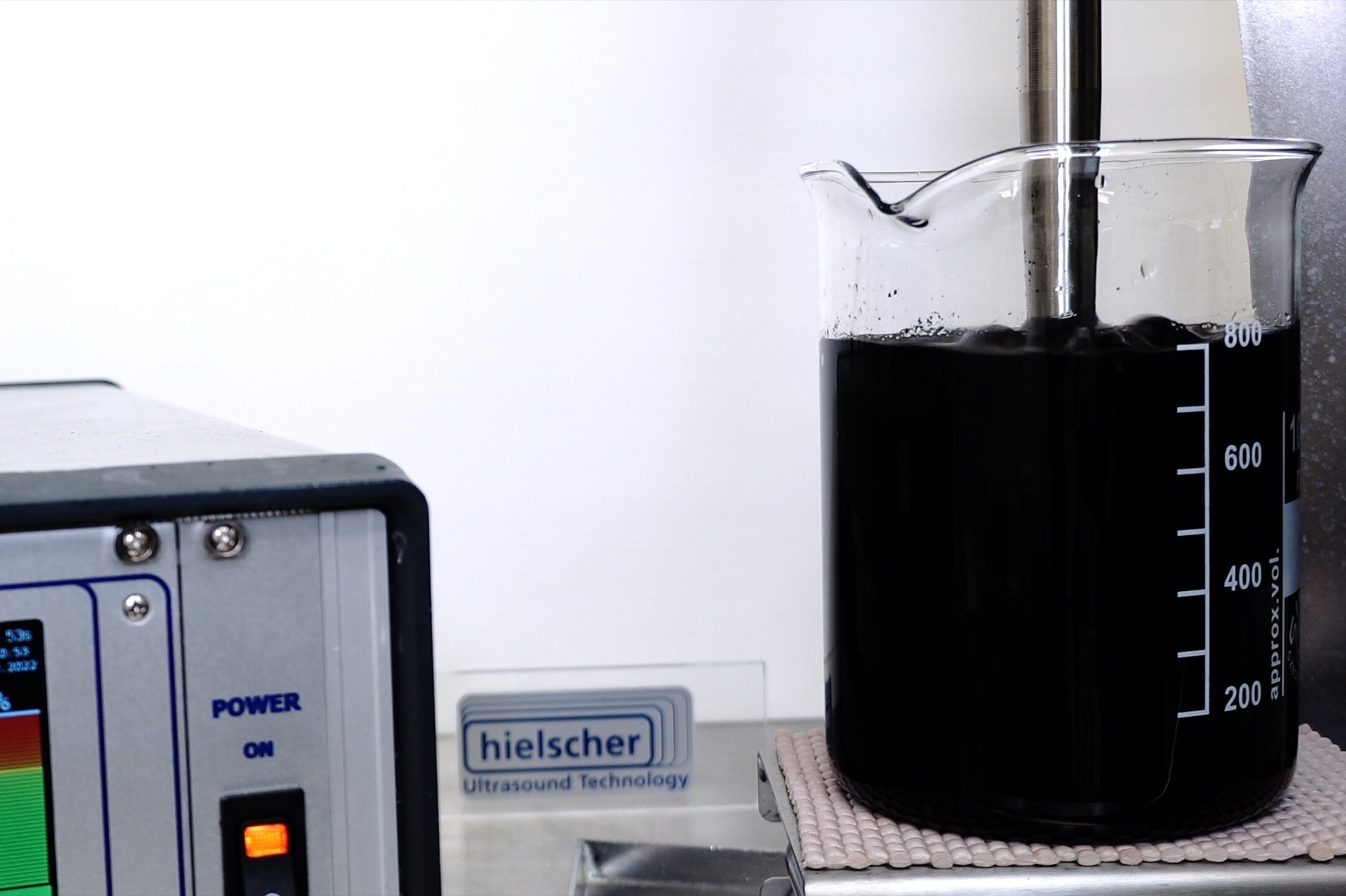 Un exemplu elocvent al eficienței tehnologiei cu ultrasunete în producția de lubrifianți provine dintr-o cercetare publicată în revista „Journal of Materials Research and Technology” (2019). Studiul, intitulat “Aplicarea nanotuburilor de carbon de tip bambus dopate cu azot în dezvoltarea lubrifianților conductori de curent electric,” demonstrează modul în care echipamentul de omogenizare cu sondă Hielscher UIP1000hdT (340 W, timp de procesare de 2 minute) a permis obținerea unor unsoare pentru rulmenți omogene, stabile și conductoare de curent electric.
Cercetătorii au utilizat nanotuburi de carbon în formă de bambus (BCNT) ca aditivi conductori pentru unsoare. Datorită încorporării azotului în structura grafitică a pereților laterali ai nanotuburilor, s-au dezvoltat proprietăți electronice și structurale extraordinare, ceea ce a condus la un comportament de adsorbție și o conductivitate electrică excelente. Nanotuburile de carbon sunt materiale nanostructurate remarcabile din punct de vedere al conductivității electrice, iar proprietățile lor electronice pot fi ajustate în mod specific prin încorporarea atomilor de azot cu ajutorul tehnicilor de dopare.
Rezultatele evidențiază puterea dispersiei cu ultrasunete:
Acest studiu de caz servește drept dovadă tehnică a conceptului: atunci când nanomaterialul potrivit este combinat cu energia ultrasonică adecvată, lubrifiantul rezultat atinge indicatori de performanță care erau considerați anterior imposibil de atins prin metodele convenționale de amestecare.

Omogenizator cu ultrasunete UIP1500hdT cu un reactor cu flux continuu prevăzut cu o manta de răcire pentru controlul temperaturii procesului în timpul sonicației.

Nanolubrifianți PTFE după 7 zile de preparare (A: ulei de bază, B: nanolubricant PTFE cu ultrasonication 1 oră, C: nanolubricant PTFE cu ultrasonication 30 min).
(Studiu și imagine: © Kumar et al., 2013)
Caracteristica principală a nano-dispersiei cu ultrasunete în lubrifianți
Metoda de dispersie cu ultrasunete oferă rezultate excepționale, care îi confirmă potențialul industrial:
- Cerințe minime privind aditivii: Cantități relativ mici de BCNT, mai precis 1,5 % în greutate, sunt suficiente pentru a obține o conductivitate electrică bună a unsorilor, care depășește 14 mS. Probele care conțin nanotuburi prezintă o conductivitate electrică bună, cu valori cuprinse între 7 și 18,5 mS în cadrul măsurătorilor staționare.
- Performanță îmbunătățită în timpul funcționării: Măsurătorile conductivității electrice efectuate în timpul funcționării efective a rulmentului cu bile relevă valori chiar mai ridicate, maximul de 31,5 mS fiind înregistrat în cazul formulării cu 3% BCNT. Conductivitatea crește în fiecare caz în comparație cu măsurătorile efectuate în stare staționară, ceea ce indică faptul că solicitarea mecanică din timpul funcționării îmbunătățește și mai mult căile de conducție.
- Performanță superioară în ceea ce privește frecarea: Proba cu un conținut de 1,5 % în greutate de BCNT prezintă caracteristici eficiente de frecare, înregistrând valori ale cuplului de frecare de 6,1 și 5,1 Nmm. Acest lucru demonstrează că o concentrație optimă a aditivului asigură un echilibru între conductivitate și performanța mecanică.
- Stabilitate termică îmbunătățită: Adăugarea de ulei de silicon cu vâscozitate ridicată (5000 mm²/s) și de silice pirogenică ca agenți de îngroșare crește punctul de picurare la peste 150 °C, remediind astfel o limitare critică în aplicațiile la temperaturi ridicate.
- Formule optimizate: Uleiul de bază PDMS, conținând 3% BCNT și 1,0% SiO₂ coloidal, cu o vâscozitate de 50 mm/s, s-a dovedit a fi foarte potrivit pentru lubrifierea rulmenților cu bile, combinând conductivitatea cu rezistența mecanică.
Ultrasunetele: Avantajul extinderii la scară industrială
 Deși dezvoltarea la scară de laborator cu ajutorul aparatului Hielscher UIP1000hdT demonstrează validitatea conceptului, adevărata valoare pentru aplicațiile industriale rezidă în scalabilitatea liniară. Sonicatoarele Hielscher oferă un avantaj unic prin capacitatea lor de scalare liniară, permițând o tranziție fără probleme de la R&De la prelucrarea pe banc de lucru la producția în linie a unor volume mari.
Pentru implementarea industrială, inginerii de proces pot utiliza modelul UIP4000hdT de 4 kW, sonicatorul UIP6000hdT de 6 kW sau puternicul UIP16000hdT de 16 kW, echipat cu celule de curgere specializate. Această abordare liniară de scalare asigură că formulele dezvoltate la scară de laborator își mențin calitatea identică a dispersiei și caracteristicile de distribuție a particulelor atunci când sunt fabricate la scară de producție. Consistența obținută prin procesarea cu ultrasunete elimină variabilitatea de la un lot la altul care afectează metodele convenționale de amestecare, aspect deosebit de important pentru aplicațiile cu lubrifianți de înaltă performanță din sectoarele aerospațial, auto și al mașinilor de precizie.
De ce ultrasonicarea este importantă pentru inovarea în domeniul lubrifianților
Avantajele dispersiei nano-aditivilor prin ultrasunete depășesc simpla eficiență a amestecării. Această tehnologie permite:
- Încărcare îmbunătățită cu aditivi: Se pot incorpora concentrații mai mari de nano-aditivi fără a se produce aglomerare, maximizând astfel beneficiile în ceea ce privește performanța.
- Stabilitate îmbunătățită la depozitare: Dispersii omogene împiedică sedimentarea și separarea fazelor pe parcursul unor perioade îndelungate de depozitare.
- Calitatea constantă a produselor: Fiecare lot de producție prezintă caracteristici de dispersie identice, ceea ce este esențial pentru aplicațiile care necesită un control strict al calității.
- Timp redus de procesare: Cavitația ultrasonică realizează dispersia în câteva minute, în loc de orele necesare în cazul metodelor tradiționale.
- Versatilitate în ceea ce privește formulele: Tehnologia este compatibilă cu diverse uleiuri de bază, agenți de îngroșare și tipuri de aditivi, oferind flexibilitate în dezvoltarea formulelor.
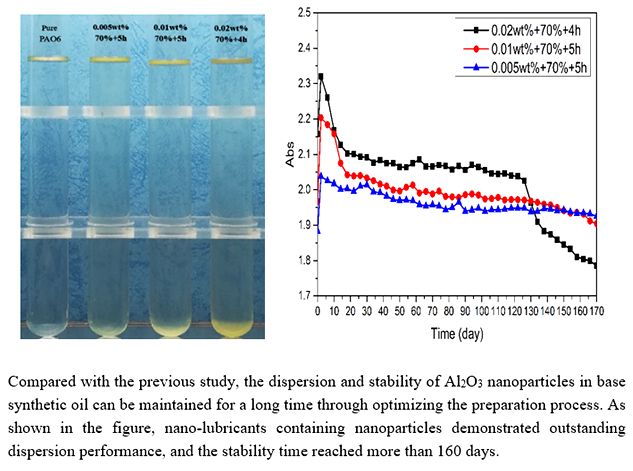
Dispersorul cu sondă ultrasonică permite obținerea unor biolubrifianți de înaltă performanță.
(Studiu și imagine: Liu et al., 2020)
Îmbunătățiți-vă producția de nanolubrifianți cu ajutorul dispersiei cu ultrasunete
Integrarea tehnologiei cu ultrasunete în procesele de producție a lubrifianților reprezintă o schimbare de paradigmă în modul în care nano-aditivii sunt încorporați în formulele lubrifianților. Așa cum a demonstrat dezvoltarea cu succes a unor unsoare conductoare electric folosind nanotuburi de carbon de tip bambus dopate cu azot, tratamentul cu ultrasunete de înaltă energie asigură dispersii omogene și stabile, cu caracteristici de performanță excepționale. Datorită capacității liniare de scalare a Hielscher, de la sonicatorul de laborator UIP1000hdT până la modelele industriale de sonicare în linie, precum UIP4000hdT, UIP6000hdT și UIP16000hdT cu celule de curgere, cercetătorii și inginerii de proces pot trece cu încredere de la R&De la etapa de cercetare și dezvoltare până la producția comercială, asigurându-ne că inovația realizată în laborator funcționează exact la fel și în fabrică.
Viitorul tehnologiei lubrifianților nu constă doar în dezvoltarea de noi nano-aditivi, ci și în stăpânirea tehnicilor de dispersie care le permit să-și valorifice întregul potențial. Prelucrarea cu ultrasunete face legătura între descoperirile științifice și aplicațiile industriale, făcând posibilă apariția unei noi generații de lubrifianți de înaltă performanță pentru aplicații industriale exigente.
Tabelul de mai jos vă oferă o indicație a capacității aproximative de procesare a ultrasonicators noastre:
| Volumul lotului | Debitul | Dispozitive recomandate |
|---|---|---|
| 1 până la 500 ml | 10 până la 200 ml/min | UP100H |
| 10 până la 2000 ml | 20 până la 400 ml / min | UP200Ht, UP400St |
| 0.1 până la 20L | 00.2 până la 4L / min | UIP2000hdT |
| 10 până la 100L | 2 până la 10L / min | UIP4000hdT |
| 15 până la 150L | 3 până la 15L / min | UIP6000hdT |
| n.a. | 10 până la 100L / min | UIP16000hdT |
| n.a. | mai mare | grup de UIP16000hdT |
Proiectare, fabricație și consultanță – Calitate Made in Germany
Hielscher ultrasonicators sunt bine-cunoscute pentru cele mai înalte standarde de calitate și design. Robustețea și funcționarea ușoară permit integrarea fără probleme a ultrasonicators noastre în instalații industriale. Condiții dure și medii solicitante sunt ușor de manipulat de ultrasonicators Hielscher.
Hielscher Ultrasonics este o companie certificată ISO și pune un accent deosebit pe ultrasonicators de înaltă performanță cu tehnologie de ultimă oră și ușurință în utilizare. Desigur, ultrasonicators Hielscher sunt conforme CE și îndeplinesc cerințele UL, CSA și RoHs.

Ultrasonicator UIP6000hdT pentru dispersia în linie a nanomaterialelor în lubrifianți
Întrebări frecvente
Care sunt tipurile de lubrifianți?
Lubrifianții sunt clasificați, în general, în lubrifianți lichizi, lubrifianți semisolizi, lubrifianți solizi și lubrifianți gazoși. Lubrifianții lichizi includ uleiurile minerale, uleiurile sintetice și uleiurile vegetale. Lubrifianții semisolizi includ unsorile. Lubrifianții solizi includ grafitul, disulfura de molibden, PTFE și nitrura de bor. Lubrifianții gazoși, precum aerul, sunt utilizați în sisteme specializate cu sarcină redusă sau de mare viteză.
Cum se pot distinge lubrifianții?
Lubrifianții se pot distinge în funcție de forma fizică, compoziția și domeniul de aplicare. În practicile de întreținere, aceștia sunt adesea grupați în patru tipuri principale: uleiuri, unsori, lubrifianți penetranți și lubrifianți uscați. Uleiurile și unsorile sunt lubrifianții cei mai des utilizați în operațiunile industriale zilnice, în timp ce lubrifianții penetranți și cei uscați sunt folosiți pentru sarcini mai specifice, cum ar fi slăbirea pieselor blocate sau reducerea frecării în cazul în care lubrifianții lichizi nu sunt adecvați.
Ce sunt biolubrifianții?
Biolubrifianții sunt lubrifianți derivați integral sau parțial din surse biologice regenerabile, precum uleiurile vegetale, grăsimile animale sau esterii sintetici obținuți din materii prime de origine biologică. Aceștia sunt concepuți pentru a asigura lubrifierea, oferind în același timp o biodegradabilitate îmbunătățită, o toxicitate mai redusă și un impact asupra mediului mai mic în comparație cu mulți lubrifianți convenționali pe bază de petrol.
Aflați cum sonicația facilitează producția de biolubrifianți!
Se utilizează PEG în lubrifianți?
Polietilenglicolul (PEG) este utilizat în lubrifianți, în special în formulele de lubrifianți solubili în apă și sintetici.
PEG poate fi utilizat ca fluid de bază, aditiv lubrifiant, modificator de vâscozitate, agent umectant sau agent de solubilizare, în funcție de greutatea sa moleculară și de compoziția sa. Este utilizat în aplicații precum fluidele pentru prelucrarea metalelor, lubrifianții pentru industria textilă, fluidele hidraulice, lubrifianții pentru compresoare, agenții de demulare și unsorile speciale.
Printre avantajele sale se numără o bună lubrifiere, solubilitatea în apă, volatilitatea redusă, stabilitatea termică și compatibilitatea cu numeroși aditivi. Cu toate acestea, PEG nu este potrivit pentru toate sistemele de lubrifiere, deoarece poate fi higroscopic, poate avea o compatibilitate limitată cu anumite uleiuri minerale, iar performanța sa depinde în mare măsură de greutatea moleculară și de condițiile de funcționare.
La ce servesc lubrifianții?
Lubrifianții sunt folosiți pentru a reduce frecarea și uzura dintre suprafețele aflate în mișcare relativă. De asemenea, aceștia contribuie la disiparea căldurii, la prevenirea coroziunii, la reducerea zgomotului și a vibrațiilor, la etanșarea jocurilor, la îndepărtarea impurităților și la îmbunătățirea eficienței și a duratei de viață a sistemelor mecanice.
De ce este importantă lubrifierea utilajelor?
Lubrifierea este importantă deoarece formează un strat protector între piesele mobile ale mașinii, împiedicând contactul direct metal-metal. Acest lucru reduce frecarea, uzura, generarea de căldură, pierderile de energie și riscul de defectare mecanică. O lubrifiere corespunzătoare îmbunătățește fiabilitatea, eficiența, durata de viață a componentelor și intervalele de întreținere.
Literatură / Referințe
- László Vanyorek, Dávid Kiss, Ádám Prekob, Béla Fiser, Attila Potyka, Géza Németh, László Kuzsela, Dirk Drees, Attila Trohák, Béla Viskolcz (2019): Application of nitrogen doped bamboo-like carbon nanotube for development of electrically conductive lubricants. Journal of Materials Research and Technology, Volume 8, Issue 3, 2019. 3244-3250.
- Kałużny Jarosł, Waligórski M, Szymański GM, Merkisz J, Różański J, Nowicki M, Al Karawi M, Kempa K. (2020): Reducing friction and engine vibrations with trace amounts of carbon nanotubes in the lubricating oil. Tribology International 2020.
- Mosleh, Mohsen; Atnafu, Neway; Belk, John; Nobles, Orval (2009): Modification of sheet metal forming fluids with dispersed nanoparticles for improved lubrication. Wear 267, 2009. 1220-1225.
- Li J, Du C, Delgado MA, et al. (2026): The application of nanocellulose in eco-friendly lubricants: A review. Friction, 2026.

Omogenizator cu ultrasunete UIP1000hdT, un sonicator puternic de 1000 de wați pentru dispersarea nanoparticulelor
- eficiență ridicată
- tehnologie de ultimă generație
- fiabilitate & robustețe
- control reglabil și precis al procesului
- Lot & Inline
- pentru orice volum
- Software inteligent
- caracteristici inteligente (de exemplu, programabile, protocol de date, control de la distanță)
- ușor și sigur de operat
- întreținere redusă
- CIP (curățare pe loc)
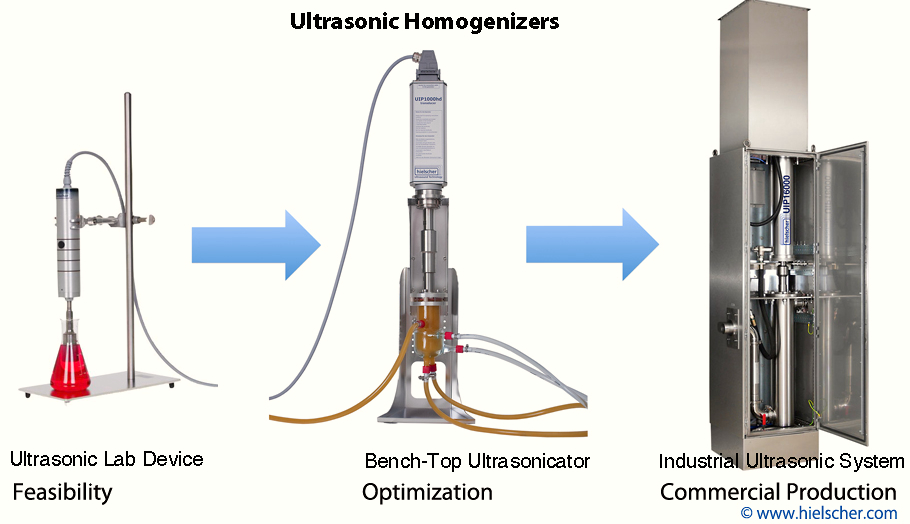
Hielscher Ultrasonics produce omogenizatoare cu ultrasunete de înaltă performanță de la Laborator spre dimensiunea industrială.